
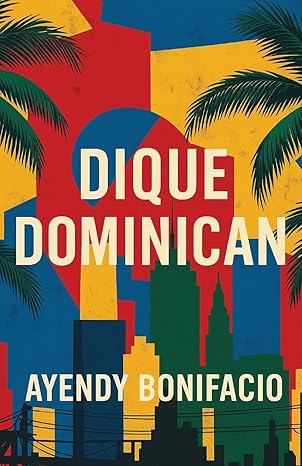
Dique Dominican by Ayendy Bonifacio was a hard read in the sense that it hit very close to home. Although Ayendy’s story is quite different from mine, I was able to connect because it touches on a different immigrant story perspective. Not all immigrants depart their countries for the same reason. Not all Dominicans leave the Dominican Republic for the same reason.
The way Bonifacio describes things, moments, and situations makes you feel like you are right there with him, watching and experiencing death, pain, fear, anger, and mostly the impact of death. It is heartbreaking, vulnerable, and honest. There is anger in the book, and anger works as a moving force for Bonifacio, who writes with openness. He does not seem scared to be judged, and his writing feels confrontational in a way that fits the story, especially as he talks about personal change and evolution.
Dique Dominican made me think about how a Dominican is supposed to look. What makes someone Dominican besides being born there or coming from Dominican descent? The word “dique,” meaning allegedly or supposedly, carries that question. Dique Dominican. Allegedly Dominican. Supposedly Dominican.
Bonifacio touches on subjects I, as an author myself, have been exploring. Reading this second rendition was refreshing. There are so many types of Dominicans. I connected with Bonifacio’s story because I also understand what it feels like to be an on-the-edge Dominican. The stereotypes remove the human in us. They make Dominican identity feel like one fixed thing, when it is not. The book shows the feeling of not being Dominican enough for the people on the island, while also not being American enough for the gringos in the States.
I could relate to some of his fears as an immigrant. I could also relate to feeling ashamed of our own language, our own culture, and our own roots. This country can make us feel that way. This country does not embrace you, but rather breaks you and creates a new version. You arrive, and it does not give you time to blink or settle. The hustle starts right when you board that plane on your way to the States.
As I read, I kept asking myself: does your tongue get gentrified too? Does your personality? In trying to fit in, survive, sound right, move right, and not be questioned everywhere, how much of yourself do you start editing before you even notice?
You yearn for returning to your real home until you realize it is too late to go back in the way you imagined. All you knew does not exist anymore, and everyone you knew has moved on. Going back never feels the same. There are disconnections, and there is a price to pay for moving on.
All his stories had me revisiting mine. When he spoke about going back to the Dominican Republic when he was fourteen, I thought about the first time I went back after moving to New York City the second time. I remembered how disconnected I felt. Even my Spanish, as someone who speaks Spanish well, felt off in certain moments. Every time he mentioned something familiar, it was easy for me to translate that experience into my own life.
One moment that stayed with me was what happened after he finished buying the guavas and esquimalitos for his cousin’s friends, when Dominican kids questioned whether he was Dominican. The same people who should have recognized him were telling him he was American. I know that feeling. In the United States, other Dominicans can make you feel not Dominican in the right way. Then you go to the Dominican Republic and feel too American for them. When he writes that he was never Dominican enough to be one of them, I felt that spit landing on my face.
The book also brings in history, especially Dominican history and the histories that shape how Dominicans understand race. Bonifacio touches on the Parsley Massacre, also known as La Masacre del Perejil, the 1937 massacre carried out under Rafael Trujillo against Haitians and Dominicans of Haitian descent. That history matters in the book because it shows that Dominican identity is not only personal or cultural. It is also political, racial, and inherited.
The memoir also moves through questions of racism in the Dominican Republic versus racism in the United States. Some terms, situations, conflicts, and concepts did not fully make sense until he arrived in the United States. In that way, migration becomes more than movement from one country to another. It becomes a different way of understanding race, Blackness, language, class, and history.
At times, the book has too many details. Some references, songs, quotes, historical facts, and personal memories may not feel necessary to every reader. There were moments when I felt the story could have moved with more clarity if some parts had been tightened. Still, those details also create the texture of the memoir. They make the book feel like a medley of everything that shaped him: Dominican references, family memories, poetry, history, music, faith, and the fragments that stay with a person after migration.
His fight with his father, their relationship, and how much his father’s death affected him were also important parts of the book. That section added another layer because Bonifacio is not only writing about immigration and identity. He is also writing about family, masculinity, grief, and the fear of repeating certain patterns.
The way he ended up in the United States was, for me, one of the most striking parts of the book. How a little boy from Juncalito ended up with a PhD in English from Ohio State University carries its own kind of power. He could have kept his story to himself, but he decided to share it and take control of his narrative.
Ayendy Bonifacio’s story is not mine, but it had me revisiting mine. That is what made the book stay with me.
Dique Dominican, Ayendy Bonifacio, 2026
Unsolicited Press
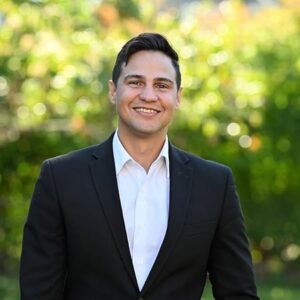 Ayendy Bonifacio (he/him/his) is a Dominican American writer, poet, and scholar whose work explores memory, migration, race, and the legacies of colonialism in the Americas. He is the author of Dique Dominican; To the River, We Are Migrants: Poems/Poemas; Bless Me, Papi (forthcoming, 2026); and the scholarly monograph Paratextuality in Anglophone and Hispanophone Poems in the U.S. Press, 1855–1901. His second collection of poems, Ríos Are for Chivos and Eternity will be released in August 2027. Bonifacio’s writing has appeared in The New York Times, Slate, The Los Angeles Review of Books, among other outlets. He is an associate professor of English at the University of Toledo in Ohio where he lives with his partner and daughter.
Reviewed by: Roxana Calderón
Roxana Calderón, born in Brooklyn, NY, and raised in Santo Domingo, DR, is a writer, poet, and editor. She released her first book, “La casa de las maletas”, with DWA Press, NYC, in 2019. Her works have appeared in various publications, including “El vuelo más largo”, a compilation of poems by Hispanic American writers, published in Peru, by Ángeles Del Papel. In October 2021, Roxana presented her first monologue, Once We Loved, at Alianza Dominicana.
In January 2024, Roxana launched her self-published poetry book, “Esto no es poesía”, featuring over 100 notes from her life from 2018 to 2022. Calderón serves as volunteer editor-in-chief of Spanglish Voces’s digital magazine and contributes to the Dominican Writers Association.
Roxana’s writing uniquely captures the emotional depth of the human experience, resonating with readers worldwide.